
Independent Educational Evaluations (IEEs)
Objective, Comprehensive, and Culturally Responsive Psycho-Educational AssessmentsWhen parents or school teams require an independent second opinion, Rosarium Education Consulting provides thorough, objective psycho-educational evaluations. Grounded in extensive public school experience, our assessments are designed to provide clear diagnostic insights, bridge communication between families and districts, and deliver actionable recommendations that serve the best interests of the student.Features of Our Assessments
Bilingual & Culturally Responsive Testing: Fully qualified to administer comprehensive psycho-educational batteries in both English and Spanish, ensuring linguistic fairness and eliminating cultural bias in assessment.Rigorous & Evidence-Based Scope: Complete evaluation of cognitive abilities, academic achievement, executive functioning, processing strengths/weaknesses, and social-emotional or behavioral needs using current, gold-standard standardized tools.Grounded in Public School Reality: Recommendations are tailored to be legally compliant, realistic, and directly implementable within public school classrooms, Multi-Tiered System of Supports (MTSS), and Special Education frameworks.Neutral & Collaborative Approach: We serve as an impartial, evidence-driven bridge—fostering transparent collaboration between parents, school psychologists, administrative teams, and SELPAs.
An Educationally Related Intensive Counseling Services (ERICS) / Educationally Related Mental Health Services (ERMHS) assessment is a comprehensive evaluation designed to better understand a student’s social-emotional, behavioral, and mental health needs within the educational setting and how those needs may be affecting the student’s ability to access and benefit from their education.
The assessment considers information from multiple sources and settings and may include student and parent interviews, teacher consultation, behavioral observations, social-emotional and behavioral rating scales, review of educational and mental health history, assessment of coping and emotional functioning, and other measures selected according to the student’s individual needs.
A comprehensive psychoeducational assessment provides a deeper understanding of a student’s unique strengths, needs, and learning profile. Evaluations integrate multiple sources of information—including standardized assessment, observations, interviews, rating scales, educational records, and input from parents and school staff—to develop a comprehensive picture of the student’s functioning.
Assessments are individualized and selected based on the specific questions being addressed rather than relying on a one-size-fits-all battery. When appropriate, evaluations also consider the student’s language, culture, educational history, and environmental experiences to support culturally and linguistically responsive assessment practices.
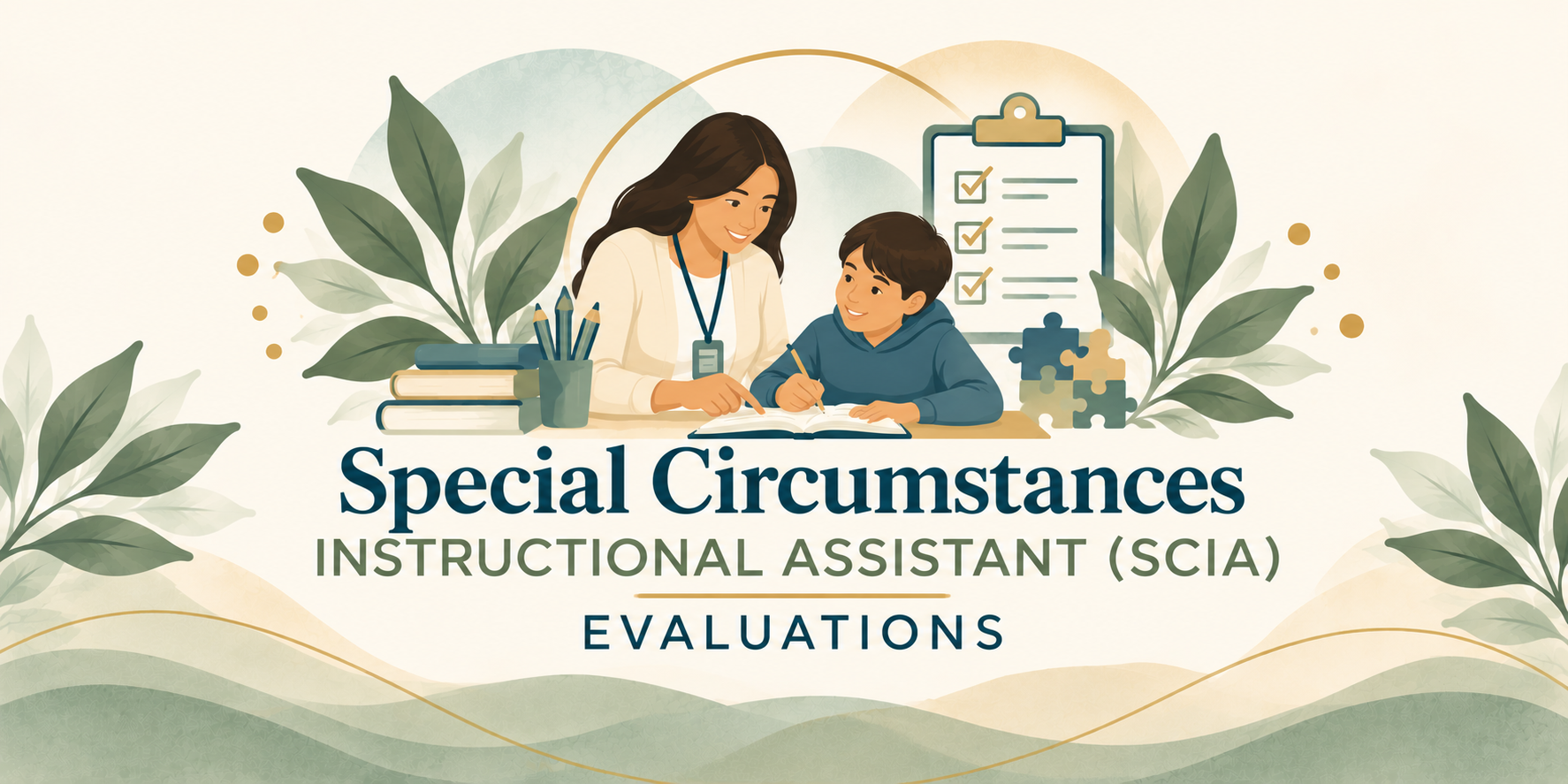
Determining whether a student requires dedicated 1:1 paraprofessional assistance is one of the most critical decisions an IEP team faces. While 1:1 support can provide vital assistance for safety and behavioral needs, over-reliance can inadvertently limit a student’s social growth and classroom autonomy.
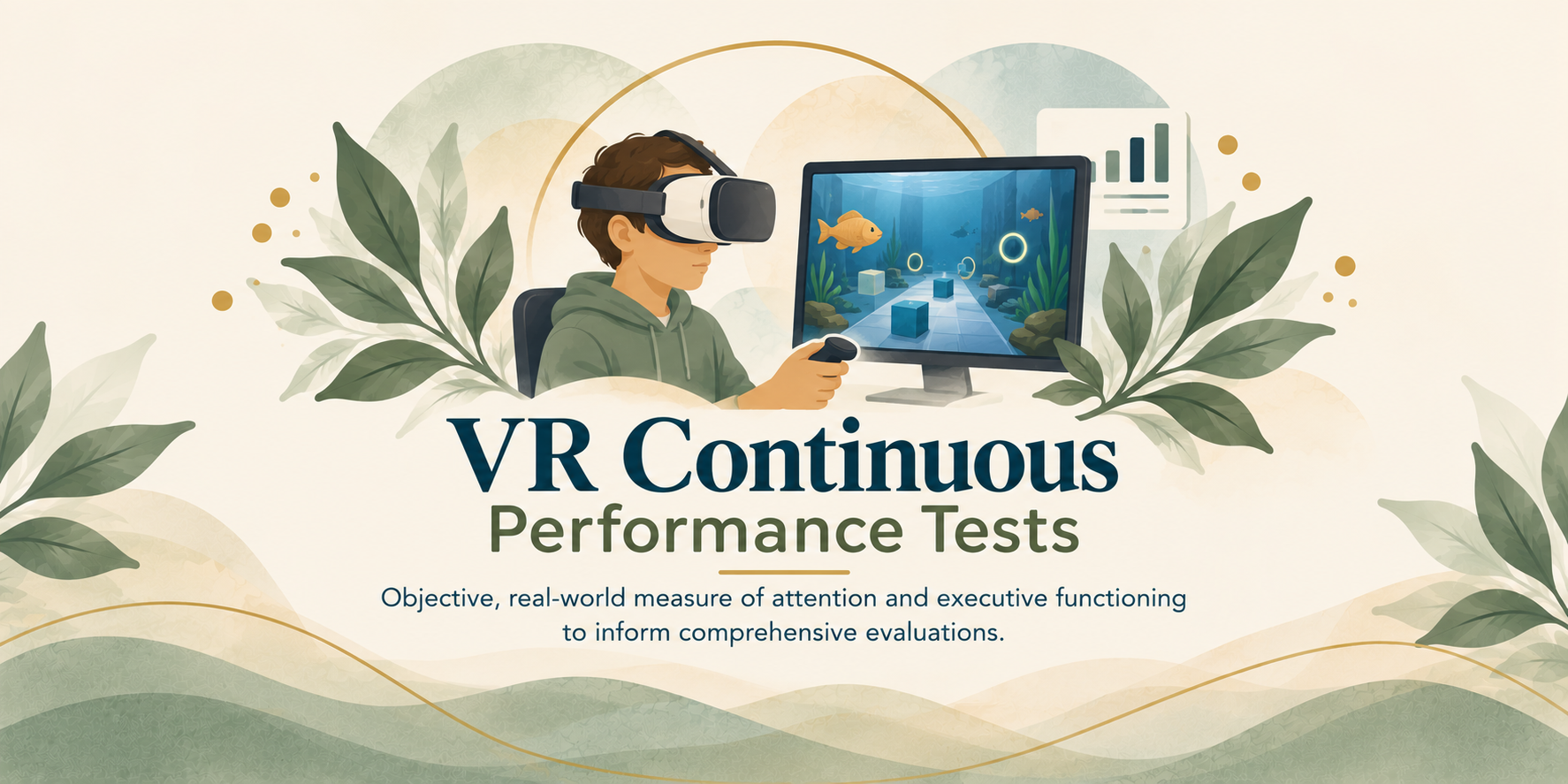
Continuous Performance Tests (CPT) are a standardized neuropsychological tool used to evaluate sustained attention, selective focus, response inhibition (impulsivity), and processing speed. During a CPT, a student responds to specific target stimuli over a set period while ignoring non-targets.The Virtual Reality Advantage (Ecological Validity):Standard CPTs take place on a flat, static computer monitor in a quiet testing room. VR-CPTs (such as the Nesplora system) elevate this process by immersing the student in an interactive, 3D world with controlled visual and auditory distractions—such as a teacher walking across the room, a classmate whispering, or a car passing by the window. This provides a true measure of how the student’s brain regulates focus in everyday environments.